How Human Capital Works in Cannabis Operations
Most operators don’t have a people problem. They have a systems problem that shows up through people.
In cannabis, that problem gets exposed faster than in almost any other industry. You are running compliance-heavy operations, tight margins, and teams that need to perform immediately.
If hiring, training, and accountability are not built correctly, it doesn’t just impact performance. It creates risk.
This is where human capital stops being an HR function and becomes an operational requirement.
Talent Acquisition Isn’t About Filling Roles
Most cannabis companies hire reactively. Someone quits, production slips, or a store is short staffed, and the goal becomes filling the gap as fast as possible.
That approach works short term. It breaks everything long term.
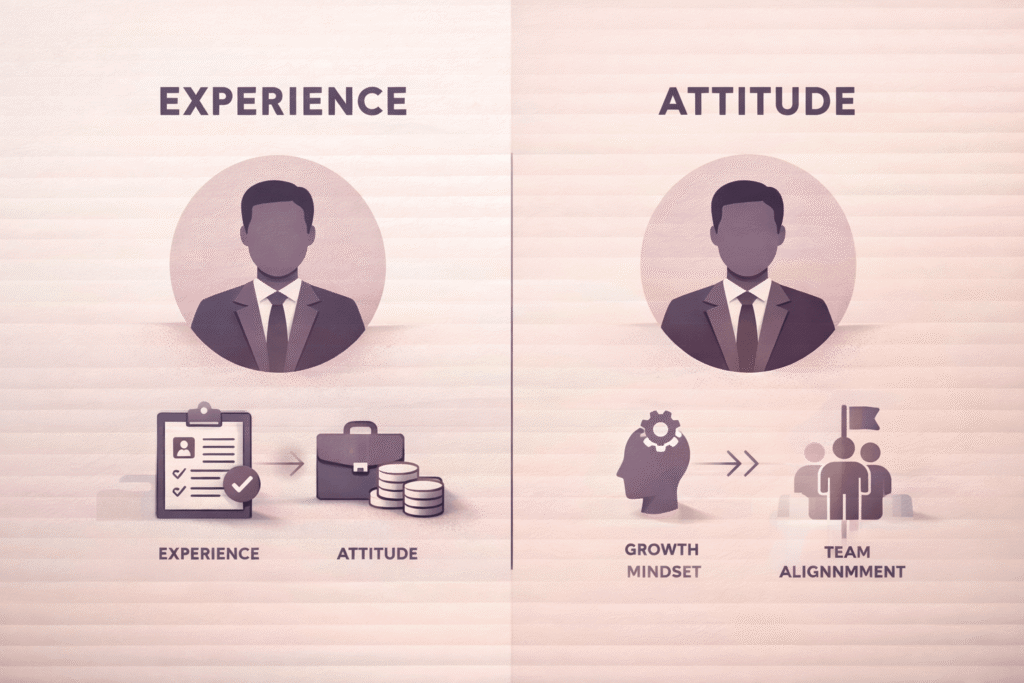
I’ve seen strong resumes come in with great experience, only to turn into cultural problems within weeks. The wrong attitude spreads faster than the right skillset.
This is where hiring philosophy actually becomes operational strategy.
Hiring for attitude and training for skill is not just a nice concept. It is necessary when teams are interdependent and mistakes carry real consequences.
When someone lacks drive, accountability, or long-term commitment, it shows up immediately in compliance, communication, and consistency.
Now the entire team feels it.
What actually matters is simple. Drive, ownership, willingness to learn, and alignment with how the business operates.
Everything else can be trained. Attitude cannot.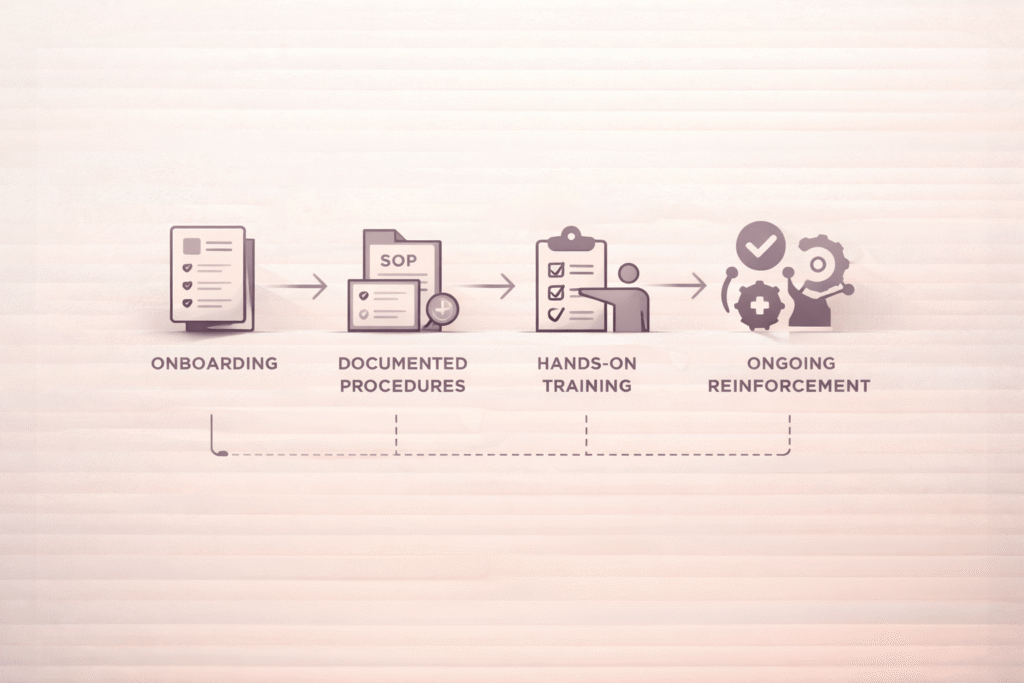
Training Is Where Most Operations Quietly Lose Control
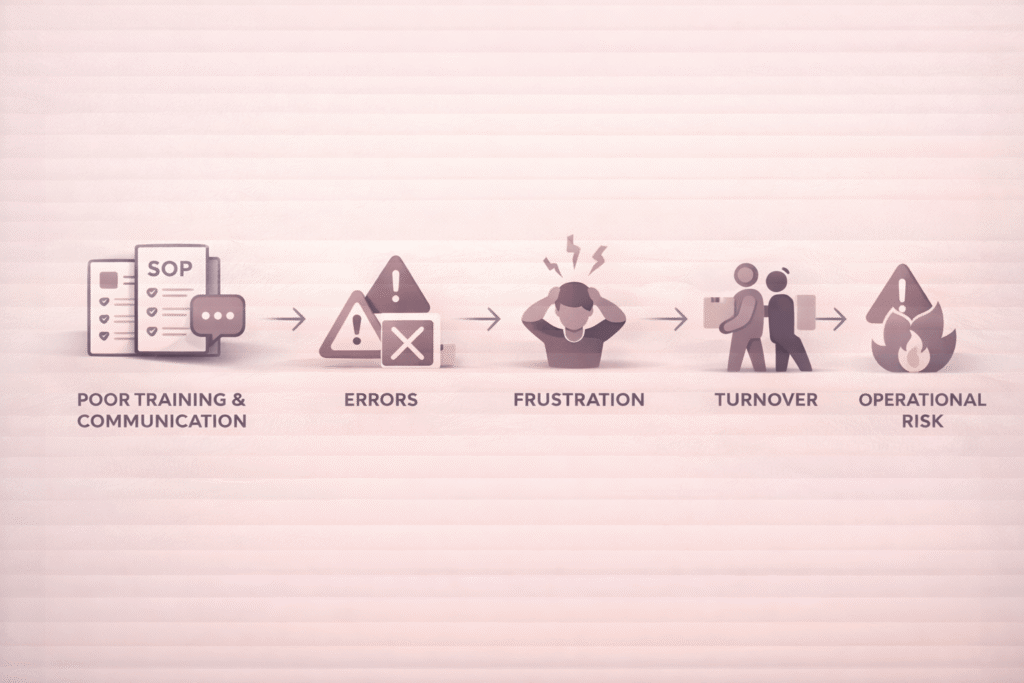
Hiring is only step one. Training is where most companies lose consistency.
In cannabis, poor training does not just lead to inefficiency. It leads directly to compliance risk.
Improper SOP execution, gaps in METRC processes, and inconsistent workflows almost always trace back to one thing. People were never properly trained.
Not because they were incapable. Because the system failed them.
Most companies believe they have training. What they actually have is onboarding.
There is a difference.
Real training means repeatable systems, documented SOPs, accountability checkpoints, and reinforcement over time.
Without that, every employee becomes their own version of the role.
That is where risk starts to build.
If your operation depends on individuals instead of systems, you do not have control.
Turnover Is a Symptom, Not the Problem
Turnover gets treated like a staffing issue. It is almost always a systems and leadership issue.
When people leave, it is rarely random. It is usually predictable.
Lack of training. Poor communication. Misaligned expectations. Compensation that does not match reality.
In cannabis, this gets amplified because the work is demanding and the margin for error is small.
If employees feel unsupported or unclear in their roles, they either disengage or leave.
Both cost you money.
The real cost of turnover is not just replacing someone. It is the disruption to workflow, the strain on the rest of the team, and the increased risk during transition.
Fixing turnover means fixing the system behind it.
Compensation Has to Match Reality
Compensation in cannabis is constrained. Margins are tight, and not every company can compete on pay alone.
But here is the reality.
If compensation does not align with expectations, performance will not align with goals.
This is not just about base pay. It is about perceived fairness.
When employees feel underpaid relative to workload or responsibility, it shows up in effort, attitude, and retention.
This is where flexible arrangements and growth opportunities come into play.
They can act as compensation.
But only if they are structured fairly.
If they are inconsistent, they turn into perceived favoritism.
And once that happens, trust drops quickly.
Communication Is the Real Operating System
Most operational issues are not caused by effort or capability. They are caused by misalignment.
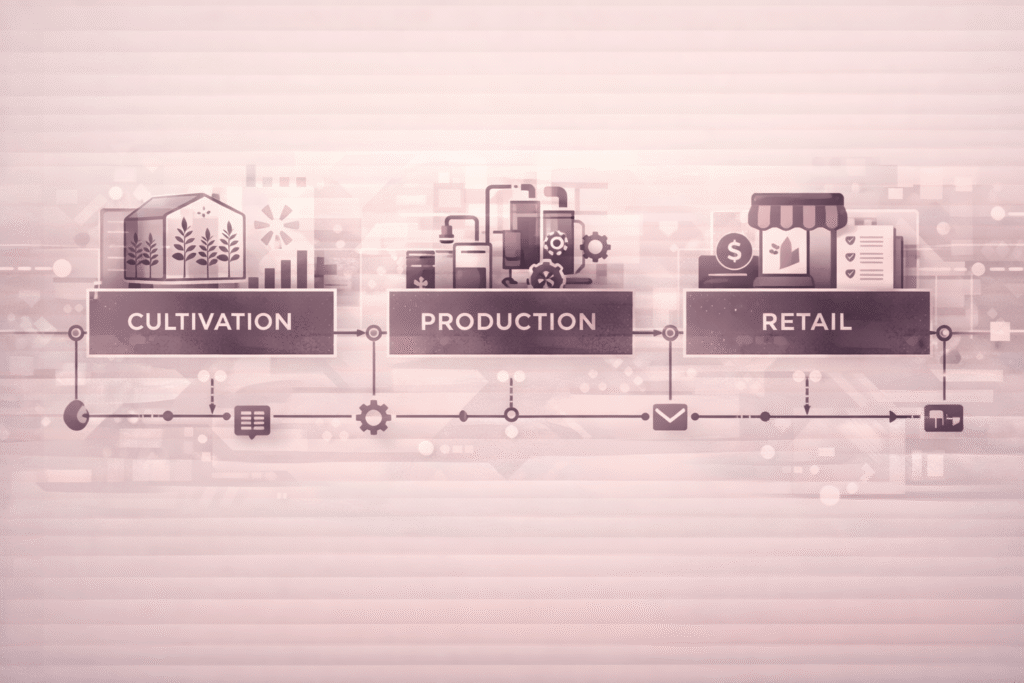
In vertically integrated cannabis companies, every department depends on the others. Cultivation feeds production. Production feeds retail. Retail feeds demand signals back upstream.
When communication breaks, everything downstream breaks.
I’ve seen culture shift quickly during periods of change. New processes, new leadership, or restructuring create confusion if communication is not consistent.
That confusion turns into frustration. Frustration turns into culture problems.
This is where psychological safety becomes operational.
If employees do not feel comfortable raising issues, asking questions, or flagging risks, problems stay hidden until they escalate.
In a compliance-driven environment, that is not sustainable.
Teams need clarity, consistency, and the ability to speak up without hesitation.
That is not culture fluff. That is risk management.
Building Systems That Work
If you strip everything down, strong human capital systems are not complicated. They are intentional.
Hire for attitude and long-term alignment. Build real training systems, not just onboarding. Align compensation with actual expectations. Create clear communication across departments. Develop internal talent instead of constantly hiring externally.
Most importantly, shift from reactive to intentional.
Right now, most cannabis companies are reacting. Filling roles, fixing issues, adjusting after things break.
The companies that scale are the ones that build systems before they need them.
Because at the end of the day, operations do not fail because of strategy.
They fail because the people executing that strategy were never set up to succeed.
And that is not a people problem.
That is a leadership decision.